
Looking for a remote place a stone’s throw from Montpellier? Then you might want to explore the Presqu’île de Maguelone: a fantastic site just 20 kilometres outside Montpellier. This peninsula, or ‘almost an isle’ as the French call it literally, is perfect for a day trip if you like to mix culture with nature. In the middle of a green oasis, you will find a cathedral and a restaurant, and wine and oysters are cultivated there as well.
Peninsula of Maguelone
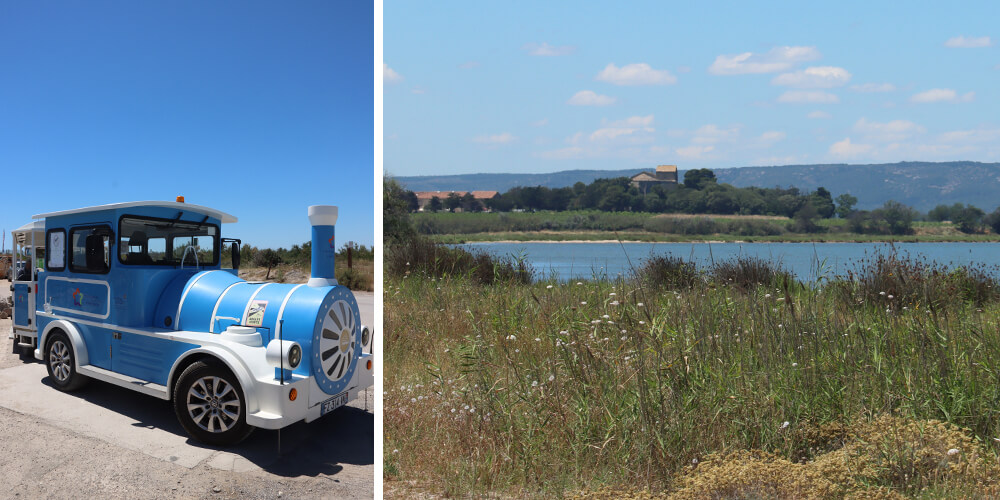
The adventure started when I parked my car at what seemed to be the last available parking lot at Palavas-les-Flots. To enter this parking lot, you have to pay 6 euros. Off-season, you can follow the long straight road to reach the peninsula of Maguelone. But walking, running, or biking the almost 2 kilometres is another option. You can also take a free little train that runs between the parking lot and the Presqu’île de Maguelone. The surroundings are beautiful: on the left side, a small strip of low dunes with access to the beach and the big blue sea and, on the right side, a great view over the Étang du Prévost.
Refuge
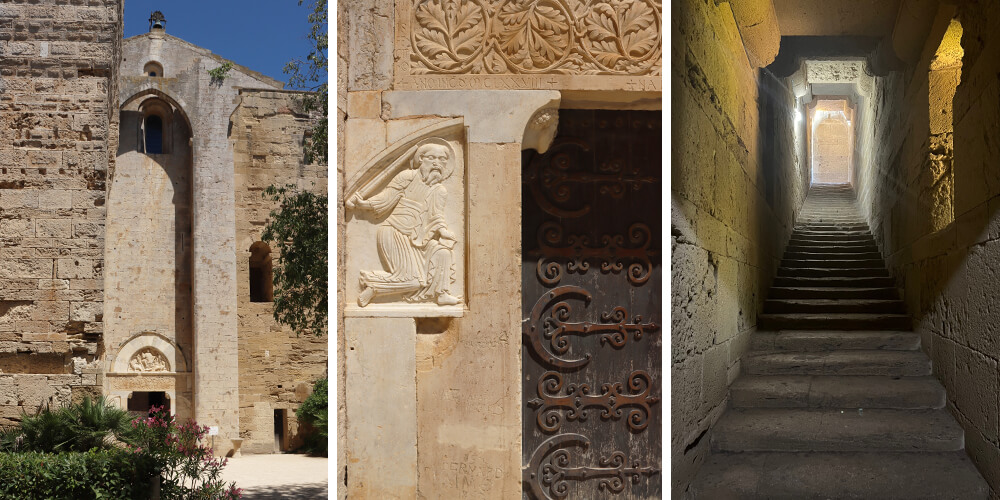
Individually, you can visit the site for free- groups of 11 persons or more pay a small contribution. By paying 4.50 euros, you can get an audio tour (available in several languages) that takes about 45 minutes. The peninsula of Maguelone has a long history. Roman and Etruscan remains have been found on the site and in the 5th century, the Visigoths created a small town on the former volcanic island. Since then, men have always occupied the land as home, fortress, agricultural land, religious centre and hiding place. The Saint-Pierre-et-Saint-Paul cathedral dates from the 12th century and was the first cathedral in the South of France. It not only served as a religious place but also as a refuge. It was a hide-out for the four popes of Rome and has always been a safe haven for sick people and fishermen. Being a shelter for people in need was more important than its religious role.
Les Compagnons
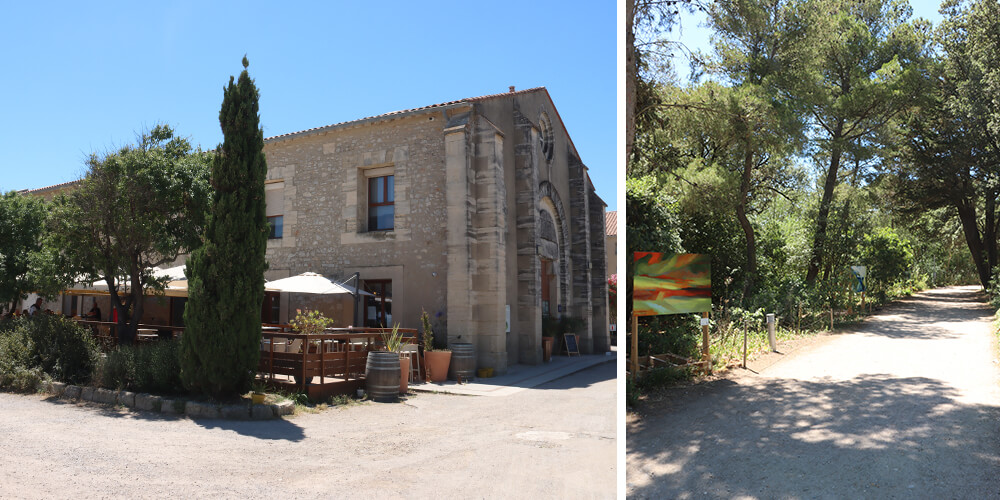
Although the thick walls of the cathedral kept me cool during my visit, I did find some shade in the lush green garden as well. Slowly, I strolled back to the visitors’ centre, which also hosts a restaurant and a small shop. While I enjoyed a delicious lunch, I learned that the peninsula is run by ‘Les Compagnons de Maguelone’. After the Fabrège family had owned the site since 1852, the last heiress wanted it to become a social workplace. And so it became a non-profit association in 1969: Les Compagnons de Maguelone. Ever since its creation, the association has hosted and educated disabled people by providing work in this unique ecosystem. With jobs as winemakers, oyster producers or waiters, 120 people run the Presqu’île de Maguelone with great pride.
Frédéric Fabrège
Presqu’île de Maguelone is located in such a magnificent place between sea and swamp. To my great surprise even in this secluded place, grapes are grown. This is the work of Frédéric Fabrège, whose father bought the Maguelone estate in 1852. Frédéric Fabrège not only saved and restored the Saint-Pierre-et-Saint-Paul cathedral but also restored the vineyards on the peninsula. With great success, as even today you can enjoy a nice organic red, rosé or white wine. Paired with a locally cultivated oyster, life can’t get much better. I decided to walk back to my car and enjoy the sea for a bit. Apparently, you can see peacocks and flamingos around the waters of Maguelone, but unfortunately, I didn’t spot them. I did see other birds though; I thought I saw some black-winged stilts and white egrets. And I’m not even a birdwatcher…

